British Science Week 2026
Thursday, 12 March 2026
Throughout the week, our lessons encouraged the children to think like scientists by asking questions about the world around them and investigating the answers.
The children took part in independent study activities, exploring topics they were personally curious about. It was wonderful to see their enthusiasm as they researched, discussed ideas and discovered new and interesting facts. Encouraging curiosity is such an important part of science, and the pupils embraced the opportunity to think creatively and ask thoughtful questions.
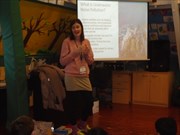
We were also delighted to welcome a special visitor to the school, Dr Sarah Hale, who delivered a fascinating assembly about underwater noise pollution. Dr Hale explained what underwater noise pollution is, how it affects marine life and helped the children explore the differences between helpful and harmful sounds in the ocean. She also discussed practical solutions that scientists and organisations are developing to help reduce underwater noise pollution.
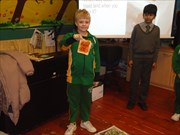
The assembly included a fun and memorable toast experiment, where some eager volunteers helped demonstrate what happens when a piece of toast is dropped. After spreading jam on their toast, they dropped it from table height ten times and recorded whether it landed jam-side up or jam-side down. We discovered that it always landed jam-side down! It was a great hands-on activity that helped the children practise making predictions, recording results, and thinking like scientists.
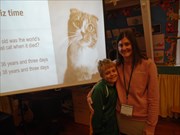
The session ended with an exciting quiz, where the children tested their knowledge by answering some curious and thought-provoking questions.
We would like to say a huge thank you to Dr Hale for taking the time to visit us at Ruckleigh and deliver such an engaging and informative assembly. Her visit may well inspire some of our pupils to consider careers in science in the future, particularly in fields such as marine biology.
Mrs Brown